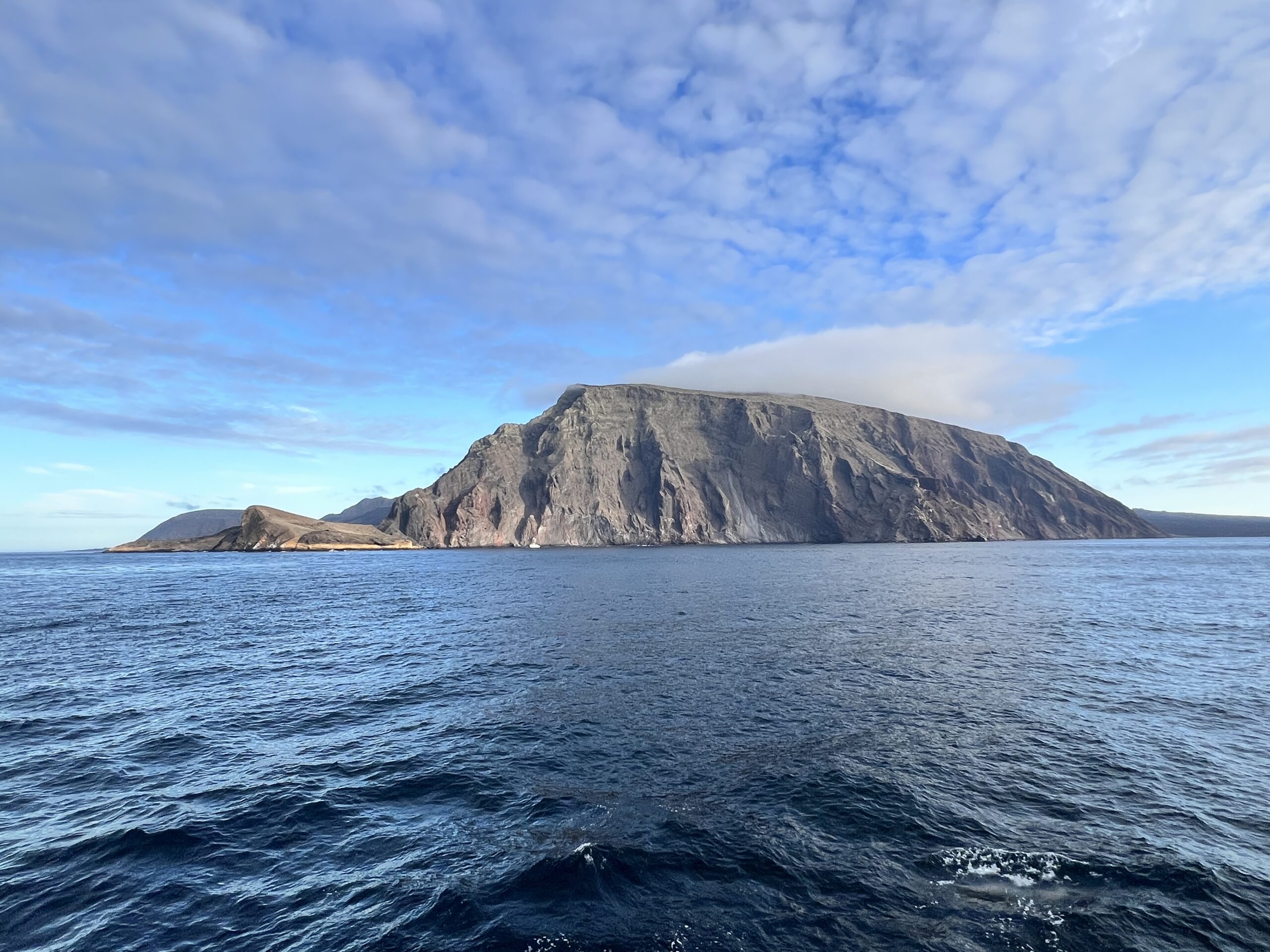
The benefits of using Artificial Intelligence for species conservation in the Galapagos Islands
The Galapagos Islands, located in the Pacific Ocean, are known for their rich biodiversity and importance in species conservation. These islands are home to many endemic and unique species in the world, making them a place of great interest to scientists and conservationists. In recent years, artificial intelligence (IA) has been used as a tool to help in the conservation of these species.
Artificial intelligence is a branch of computer science that focuses on the creation of systems capable of performing tasks that require human intelligence. These systems can learn, reason and make data-based decisions. In the case of the Galapagos Islands, IA has been used to collect and analyse data on the species that inhabit these islands, allowing scientists to obtain valuable information on their behaviour and habitats.
One of the ways the IA has been used in the Galapagos Islands is through the implementation of trap cameras. These cameras are equipped with motion sensors and are able to capture images and videos of animals that pass ahead of them. The IA is used to analyze these images and videos, automatically identifying the species and recording their behavior. This has enabled scientists to obtain accurate data on the distribution and abundance of species on the islands, which is essential for their conservation.
Another use of IA in the Galapagos Islands is in the identification of species. The IA has been shown to be able to automatically identify species from sound images and recordings. This is especially useful for species that are difficult to identify visually or have characteristics similar to other species. The ability of the IA to identify species quickly and accurately has enabled scientists to collect more complete data on the diversity of species on the islands.
In addition to species identification, IA has also been used to predict the behaviour of species in response to changes in their environment. Scientists have used IA models to simulate different scenarios and predict how species could respond to climate changes, food availability and other environmental factors. These predictions are essential for the planning of conservation strategies and informed decision-making.
The use of IA in species conservation in the Galapagos Islands has proved to be highly beneficial. Through the IA, scientists have been able to collect more accurate and complete data on the species that inhabit these islands, which has improved our understanding of their behaviour and habitats. This, in turn, has led to the development of more effective conservation strategies and informed decisions to protect these species.
However, it is important to bear in mind that IA is not a unique solution to all conservation challenges. Although a powerful tool, its use must be complemented by other conservation strategies, such as habitat protection, environmental education and the participation of local communities. The IA should be used as an additional tool to improve the effectiveness of these strategies and not as a replacement of them.
In short, the use of artificial intelligence in species conservation in the Galapagos Islands has proved to be highly beneficial. The IA has enabled scientists to collect more accurate and complete data on the species that inhabit these islands, which has improved our understanding of their behaviour and habitats. This, in turn, has led to the development of more effective conservation strategies and informed decisions to protect these species. However, it is important to use IA as a complementary tool to other conservation strategies and not as a replacement for them.